Welcome to the Texas Advanced Energy Business Alliance
-

Better Energy Solutions
New technologies and business models are fundamentally changing the way we make, manage, and use energy. We call these technologies “advanced energy,” and they are leading toward a prosperous future.
-
An Economic Opportunity
Texas is a natural for advanced energy. Texas has abundant homegrown resources for making the energy we use secure, clean, reliable, and affordable. And Texas has the pro-business, pro-growth spirit to make the most of the advanced energy opportunity.
-

Making It Happen
The Texas Advanced Energy Business Alliance is made up of companies that are making it happen. As these companies grow, so does the Texas economy, creating jobs and contributing toward prosperity for all Texans.
Download the Report
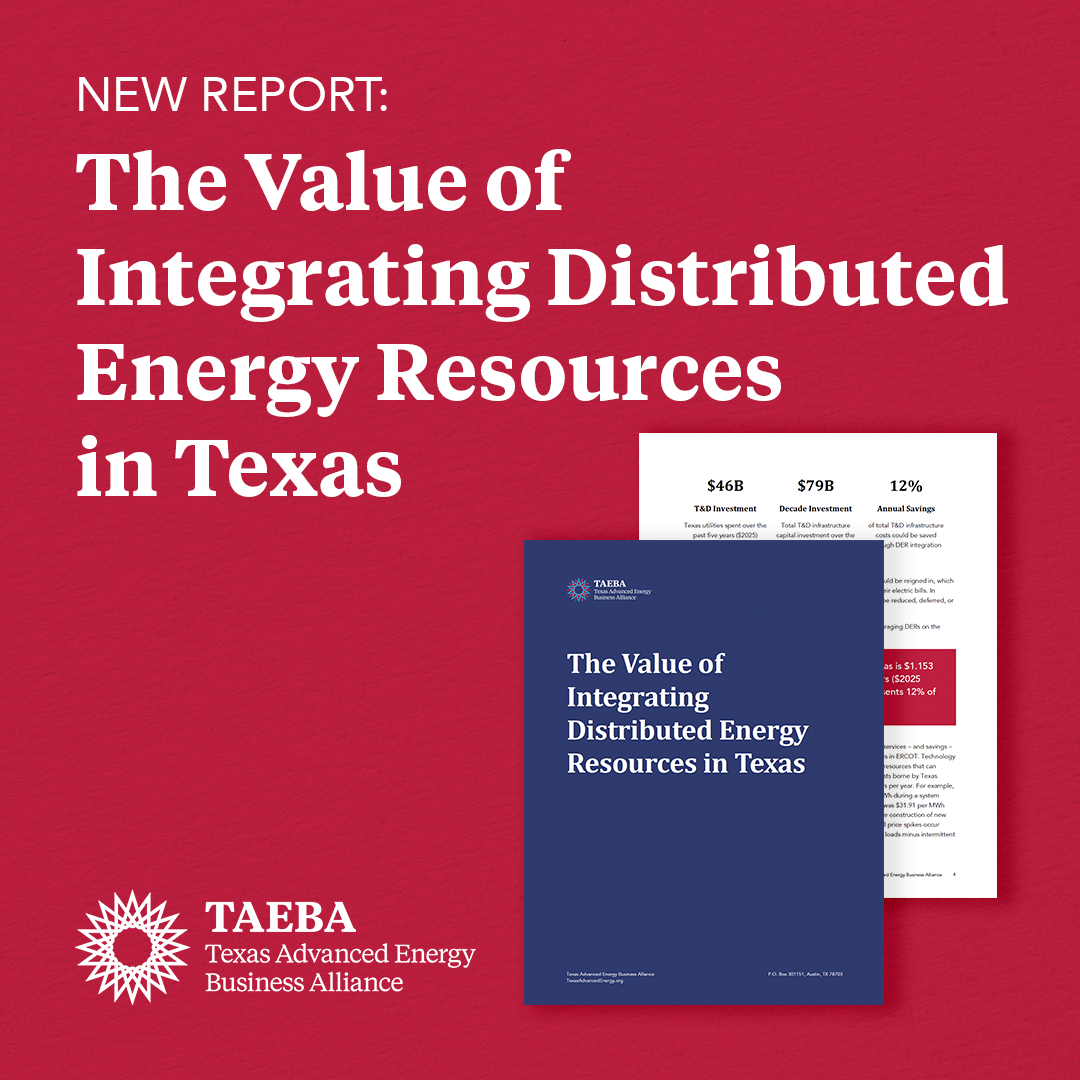
Texas is growing fast, and with that growth comes rising energy demand. A new report from the Texas Advanced Energy Business Alliance, produced by Demand Side Analytics, finds that Texas could save billions by better integrating distributed energy resources (DERs) – like battery storage, smart thermostats, electric vehicles, charging equipment, and other smart devices – into the Electric Reliability Council of Texas’s (ERCOT) grid planning and market operations.
The study shows that including customer-owned technologies in these processes would save the average Texas customer $1,851 over ten years. Those savings come from avoiding unnecessary grid expansion and reducing wholesale electricity costs – benefits currently being left on the table because of outdated planning and interconnection practices. Better use of local, customer-owned energy resources could help Texans avoid nearly $8.2 billion in unnecessary grid upgrades over the next decade. The report places the total value of better DER integration at $18.9 billion over ten years, with savings that would strengthen reliability, enhance competition, and help meet the state’s growing power needs.
ERCOT provides electricity to more than 27 million customers across Texas, accounting for about 90 percent of the state’s electric load. Modernizing ERCOT’s planning and market rules to allow distributed energy participation would unlock these savings while improving transparency, competition, and grid resilience across the Texas electric system.